
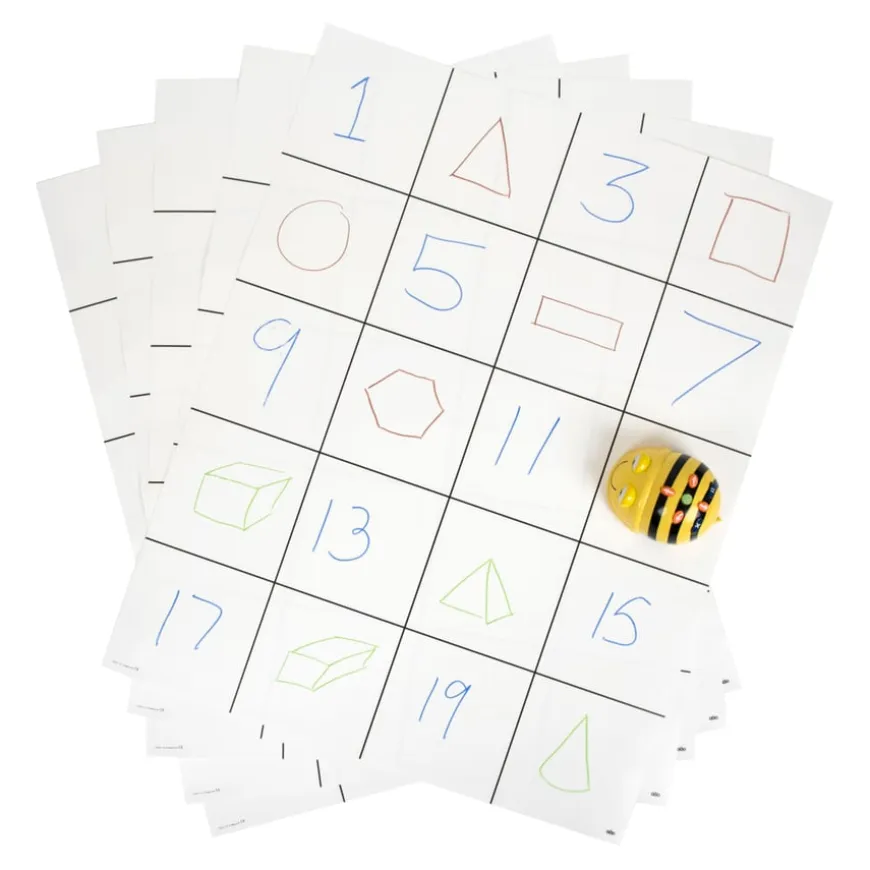
TTS Bee-Bot® Tear Off Pad
£18.99
Helping to Support Teaching and Learning
-
Engaging Learning Tool
-
Each tear-off sheet serves as a personal canvas for children to draw or stick content, promoting active participation and creativity in computing lessons.
-
Curriculum Aligned
-
Supports Key Stage 1 and 2 computing curriculum, focusing on program creation and debugging through practical application.
-
Versatile Use
-
Compatible with Bee-Bot and Blue-Bot, offering a flexible resource for creating diverse and topical routes that enhance coding education.
-
Pad Design
-
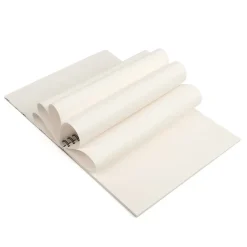
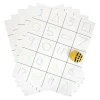
Paper pad of grids, suitable for frequent use in classroom settings.
-
Foundational Skills
-
Facilitates the development of computational thinking by enabling children to predict program behaviour, crucial for early computing education.
TTS Bee-Bot® Tear Off Pad
Perfect for engaging the whole class, allowing each child to have their own grid for creative input.
Overview
-
Facilitates the creation of diverse routes for Bee-Bot and Blue-Bot, enhancing interactive learning experiences.
-
The TTS Bee-Bot Tear Off Pad, designed to enrich computational thinking and coding skills among young learners, encourages an active, hands-on approach to problem-solving and logical reasoning. By allowing each child to have their own grid for drawing or placing content, it fosters individual creativity within a collaborative learning framework.
-
Integral to the computing curriculums at Key Stages 1 and 2, it lays the groundwork for programming concepts. It provides a practical method for teaching the creation and debugging of simple programs. These foundational skills are made accessible and engaging through its use.
-
This pad integrates seamlessly with Bee-Bot and Blue-Bot, creating a versatile resource that enriches coding lessons and supports a broad scope of educational objectives, preparing children for future learning advancements.
Supports the National Curriculum
Computing, Key Stage 1
Create and debug simple programs.
Computing, Key Stage 2
Design, write and debug programs that accomplish specific goals, including controlling or simulating physical systems and solve problems by decomposing them into smaller parts.
Product Information
Be the first to review “TTS Bee-Bot® Tear Off Pad”
Related products
Exercise Books
Art, Craft & Design


Art & Craft
Classroom Chairs
Art & Craft
Art, Craft & Design

Art & Craft
Art, Craft & Design
Art, Craft & Design
Art, Craft & Design
Art, Craft & Design

Art, Craft & Design
Art, Craft & Design
Art, Craft & Design
Reviews
There are no reviews yet.