
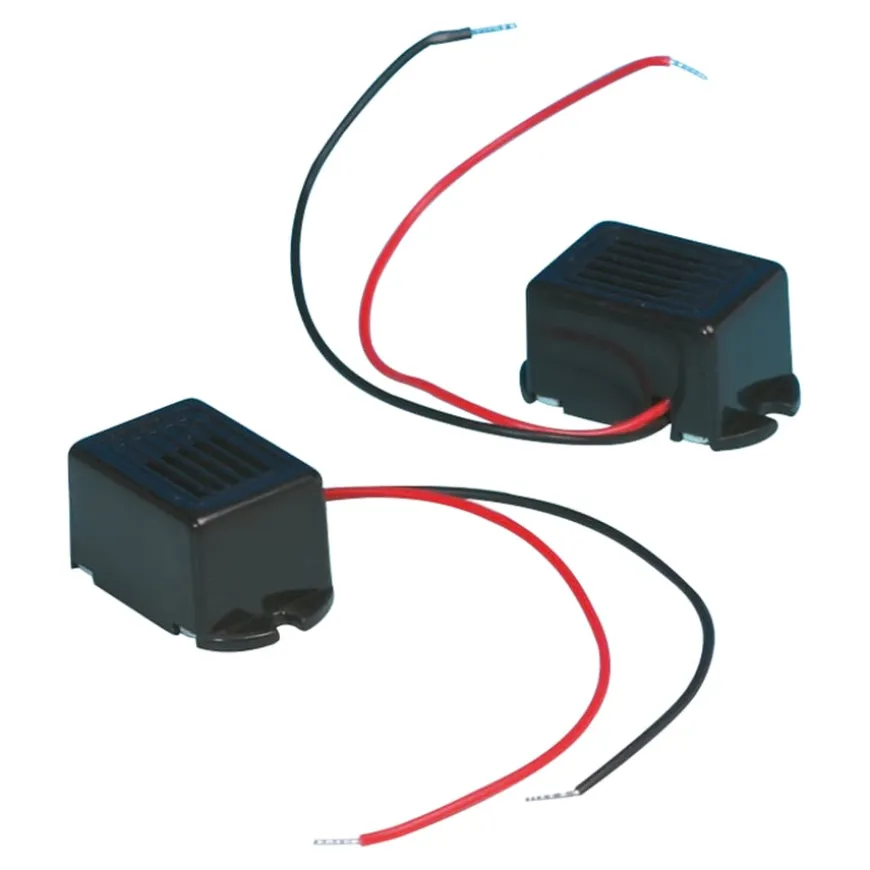
Miniature Electronic Circuit Buzzers 10pk
£11.39
Helping to Support Teaching and Learning
-
Hands-On Learning
-
These buzzers offer a practical approach to learning about electricity by constructing series circuits. Perfect for group tasks, they promote collaborative learning and active experimentation.
-
Curriculum Support
-
Aligns with Year 6 science objectives by helping children compare component functions and understand variations in buzzer loudness. Supports technical knowledge in Key Stage 2 design and technology.
-
Symbol Recognition
-
Facilitates teaching children to use recognised symbols when representing circuits. This reinforces their understanding of electrical concepts and enhances diagrammatic skills.
-
Durable Design
-
Constructed from durable materials, these buzzers are designed for repeated use in educational settings, ensuring longevity and reliability during experiments.
-
Year 4 Science
-
Supports Year four science by enabling children to construct simple series circuits. Helps identify and name basic parts like cells, wires, bulbs, switches, and buzzers.
Miniature Electronic Circuit Buzzers 10pk
Pack of miniature electronic circuit buzzers for science and D&T projects.
Overview
-
Enhance understanding of electrical circuits with these buzzers, perfect for practical science and D&T lessons and experiments.
-
These miniature electronic circuit buzzers support hands-on science learning and curriculum goals. Ideal for exploring electricity fundamentals, they allow children to construct simple series circuits.
-
Transistor oscillator buzzers with a single tone output. 100mm red and black wire leads.
-
In Year 6 science, they help compare variations in buzzer loudness and associate volume with cell voltage. They support technical knowledge in Key Stage 2 design and technology, incorporating electrical systems into products.
-
These buzzers teach children to use recognised symbols for circuits, reinforcing electrical concepts. Constructed from durable materials, they ensure longevity in educational environments. Note: other components like cells and wires are sold separately.
Supports the National Curriculum
Science, Year 4, Electricity
Construct a simple series electrical circuit, identifying and naming its basic parts, including cells, wires, bulbs, switches and buzzers.
Science, Year 6, Electricity
Compare and give reasons for variations in how components function, including the brightness of bulbs, the loudness of buzzers and the on/off position of switches.
Science, Year 6, Electricity
Associate the brightness of a lamp or the volume of a buzzer with the number and voltage of cells used in the circuit.
| Choice | 1.5V |
|---|
Be the first to review “Miniature Electronic Circuit Buzzers 10pk”
Related products


Festivals & Celebrations
Festivals & Celebrations

Dens & Play Equipment


Early Years
Boxes & Containers

Art & Craft

Construction


Babies & Toddlers


Babies & Toddlers


Pe & Outdoor
Early Years
Exercise Books
Boxes & Containers


Pe & Outdoor

Early Years


Festivals & Celebrations
Reviews
There are no reviews yet.