
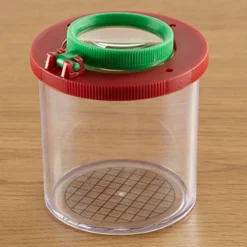
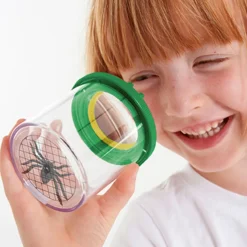
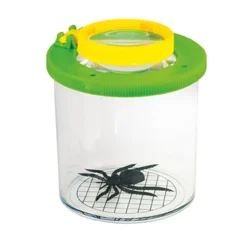
Bug Viewer Pot
Original price was: £4.56.£3.79Current price is: £3.79.
Helping to Support Teaching and Learning
-
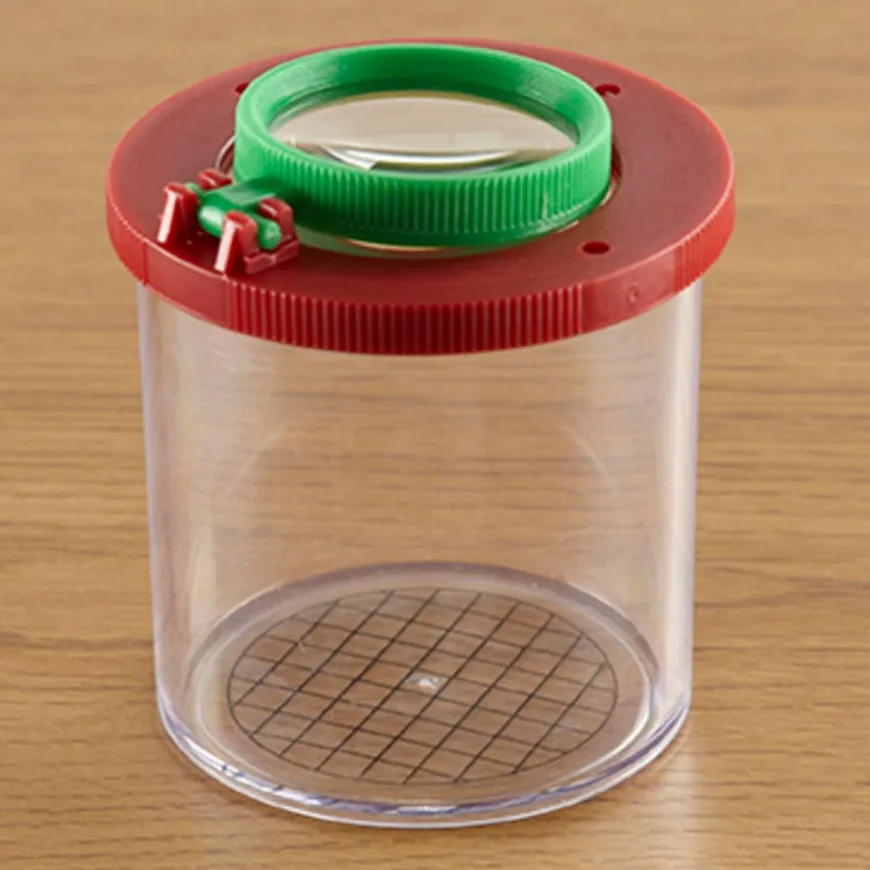
2x Magnification Lid
-
The 2x magnification lid allows for detailed observation of smaller creatures and objects, enhancing visual learning and discovery.
-
3.5x Fold-Over Lens
-
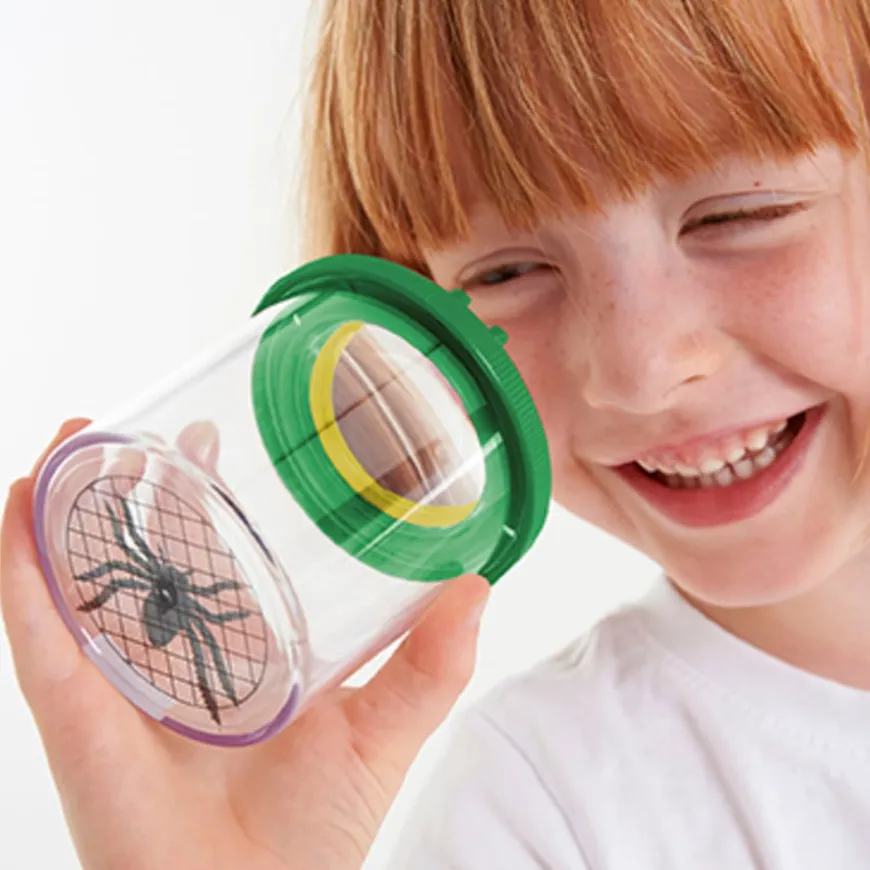
Features a 3.5x magnification viewer with a fold-over lens, providing an up-close view for in-depth study of minibeasts and plant life.
-
Measurement Gridlines
-
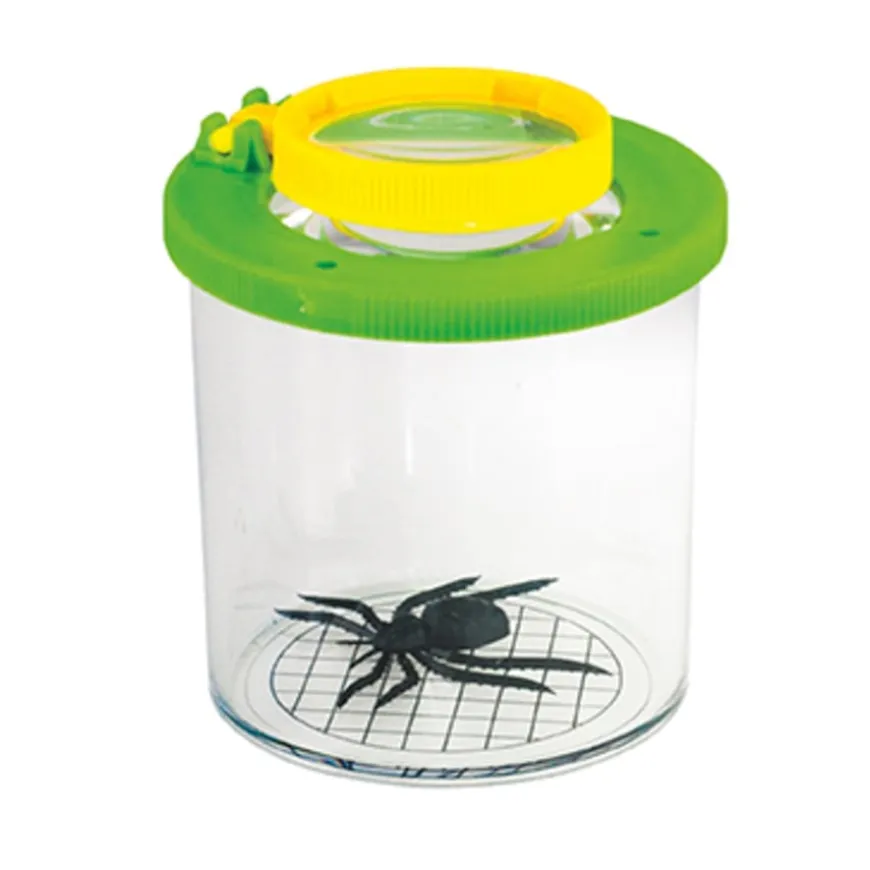
Includes gridlines on the base, enabling precise measurements and fostering mathematical skills alongside observational learning.
-
Durable Construction
-
Robust materials make up this viewer, ensuring longevity and reliability for extensive outdoor and classroom use.
-
Supports Key Stage 1 Science
-
Aligns with Key Stage 1 Science, aiding in ‘Working scientifically’ through identifying, classifying, and observing using simple equipment.
Bug Viewer Pot
A hand-held viewing pot designed for observing minibeasts with a 2x magnification lid.
Overview
-
Equipped with a fold-over lens for 3.5x magnification, this viewer also features gridlines on the base for precise measurements.
-
The bug viewer pot offers a hands-on approach to learning, elevating the observation of minibeasts to an engaging educational experience. With a 2x magnification lid and a 3.5x fold-over lens, this tool magnifies the wonders of nature, motivating children to explore the biological and environmental sciences.
-
Aligning with Key Stage 1’s ‘Working scientifically’ criteria, it provides an invaluable resource for observing the detailed structure of common minibeasts in Year 1 and investigating living things in their habitats by Year 4. The base gridlines allow for the integration of mathematical skills, promoting an interdisciplinary approach to scientific inquiry.
-
Constructed for durability, this bug viewer pot supports both outdoor explorations and classroom use, making it a versatile addition to any educational setting. It not only supports scientific learning but also encourages an appreciation for the natural world.
Supports the National Curriculum
Science, Key Stage 1, Working Scientifically
Pupils should be taught to use practical scientific methods, processes and skills through identifying and classifying.
Science, Key Stage 1, Working Scientifically
Observing closely, using simple equipment.
Product Information
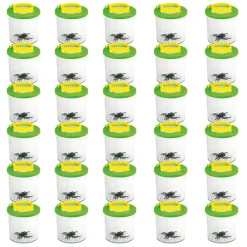
| Pack Size | 1, 30 |
|---|
Be the first to review “Bug Viewer Pot”
Related products
Boxes & Containers
Babies & Toddlers
Festivals & Celebrations
Early Years
Early Years
Babies & Toddlers


Communication, Language & Literacy

Art & Craft
Book Storage

Festivals & Celebrations
Exercise Books

Festivals & Celebrations
Early Years


Babies & Toddlers
Babies & Toddlers
Reviews
There are no reviews yet.